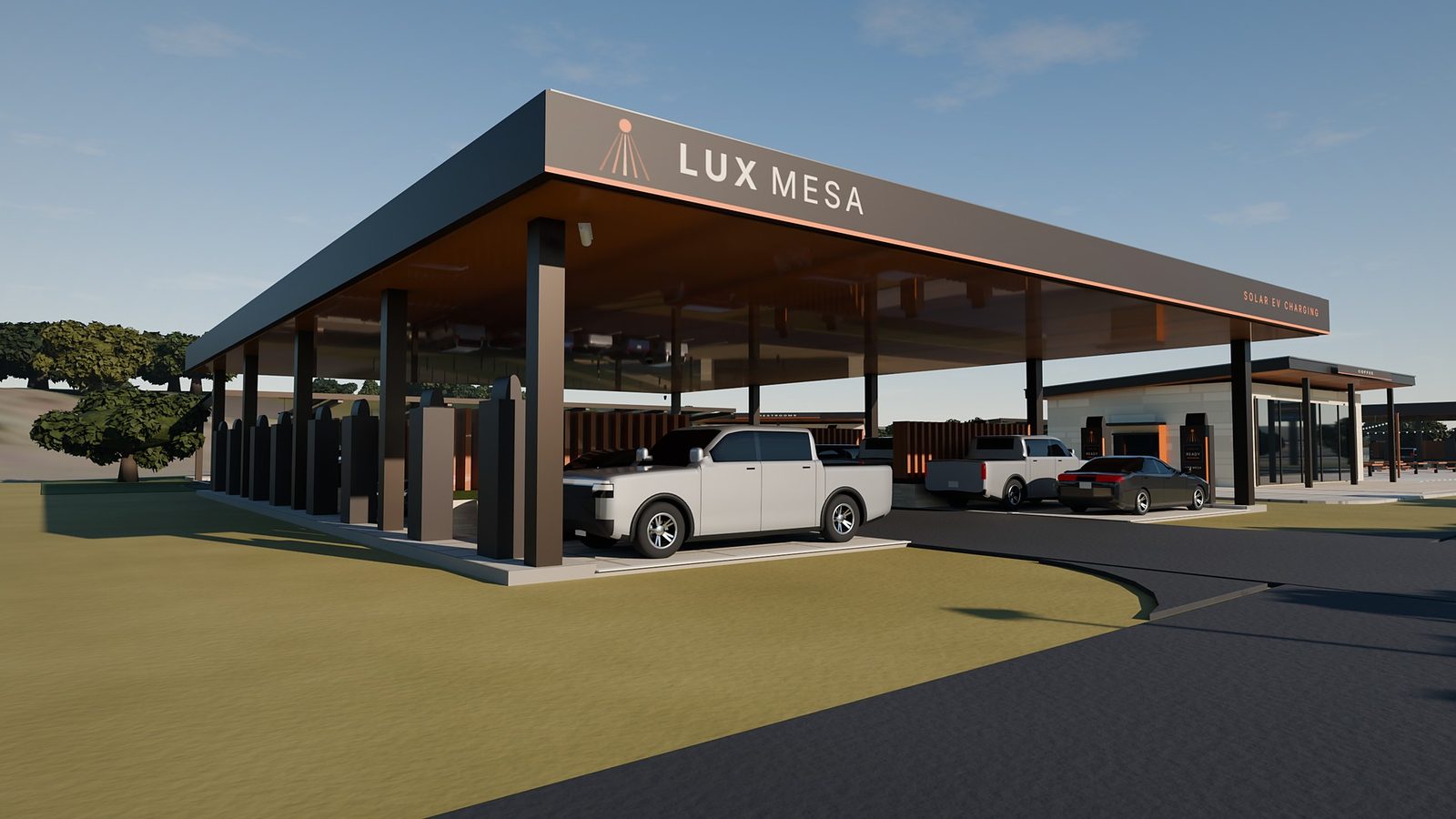
Fast, shaded charging
DC fast chargers under a solar canopy, built for any EV. Stalls are a generous 20 feet deep, so full-size pickups fit, and the station would grow from 8 to 28 stalls as demand does.
Lux Mesa · Potential site · Bruceville-Eddy, Texas
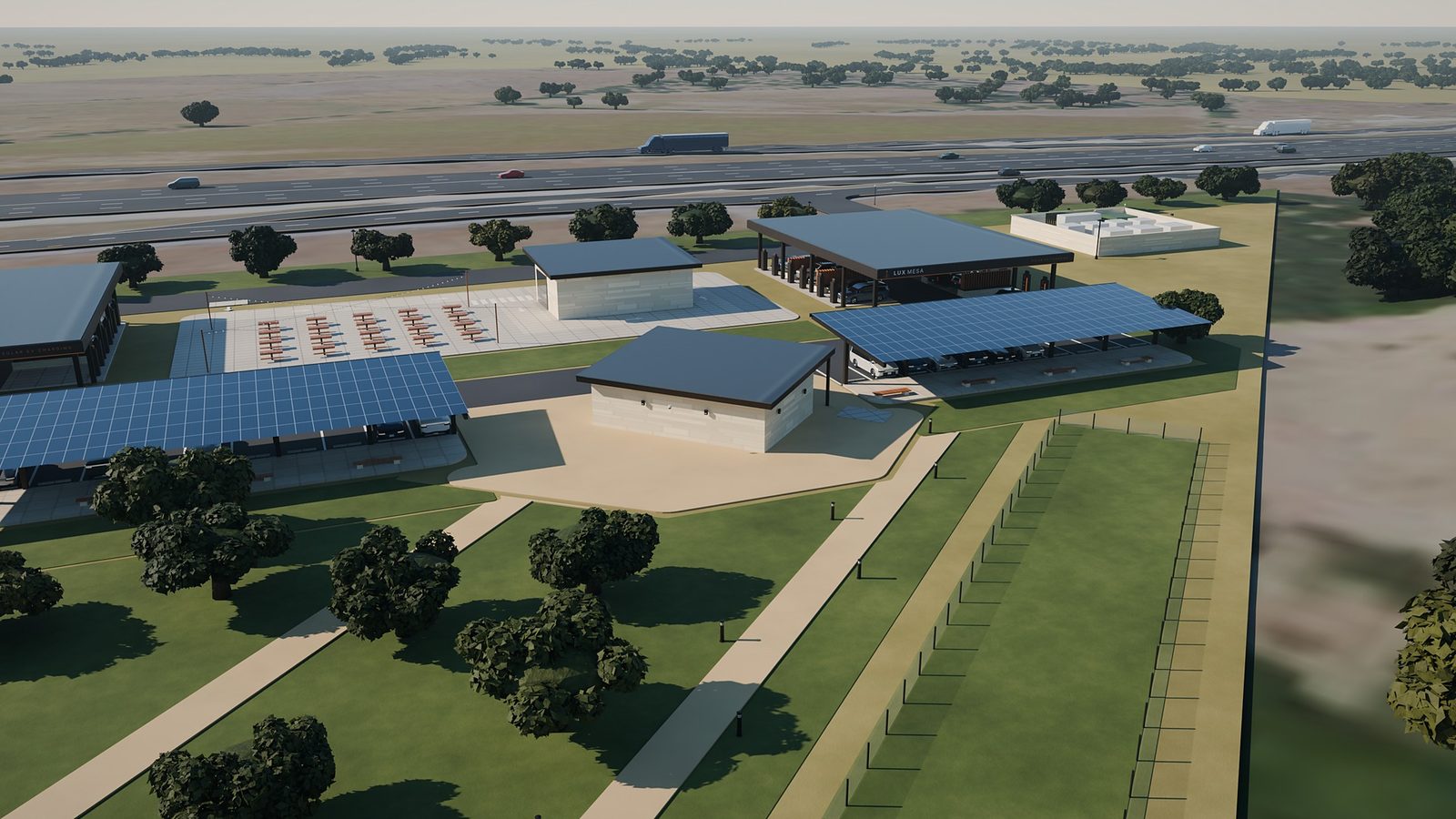
An early concept for a solar-powered fast-charging stop on the southbound I-35 frontage road at Bruceville-Eddy: shade, a garden, clean private restrooms and good coffee.
POTENTIAL SITE · UNDER STUDY EXPLORE IN 3DPowered by the panels overhead
A Lux Mesa stop here would make its own power. Solar panels on the charging canopies, the courtyard carports and the ground rows feed the station directly, a battery smooths out the peaks, and the grid fills in the rest.
Estimated, by year of operation. The array stays the same size while charging grows from 8 to 28 stalls, so solar's share settles near 19%.
| Year | Stalls | Solar used (MWh) | Solar share |
|---|
The carbon math
Every kilowatt-hour the panels supply is one the station doesn't buy from the Texas grid. Here's what that would add up to, compared with an identical station running on grid power alone.3
avoided once the station is fully built out, versus the same 28-stall stop running entirely on grid power.
That's the annual emissions of about 58 typical gasoline cars, cancelled out by the panels alone.4
avoided over the station's first twenty years of operation, with no change in how drivers charge.
At full build-out, drivers charging here would cut tailpipe-equivalent emissions by about 77% (roughly 3,800 tonnes a year) compared with driving the same miles on gasoline, and solar takes another 19% off what a grid-only charger would emit.5
The site concept
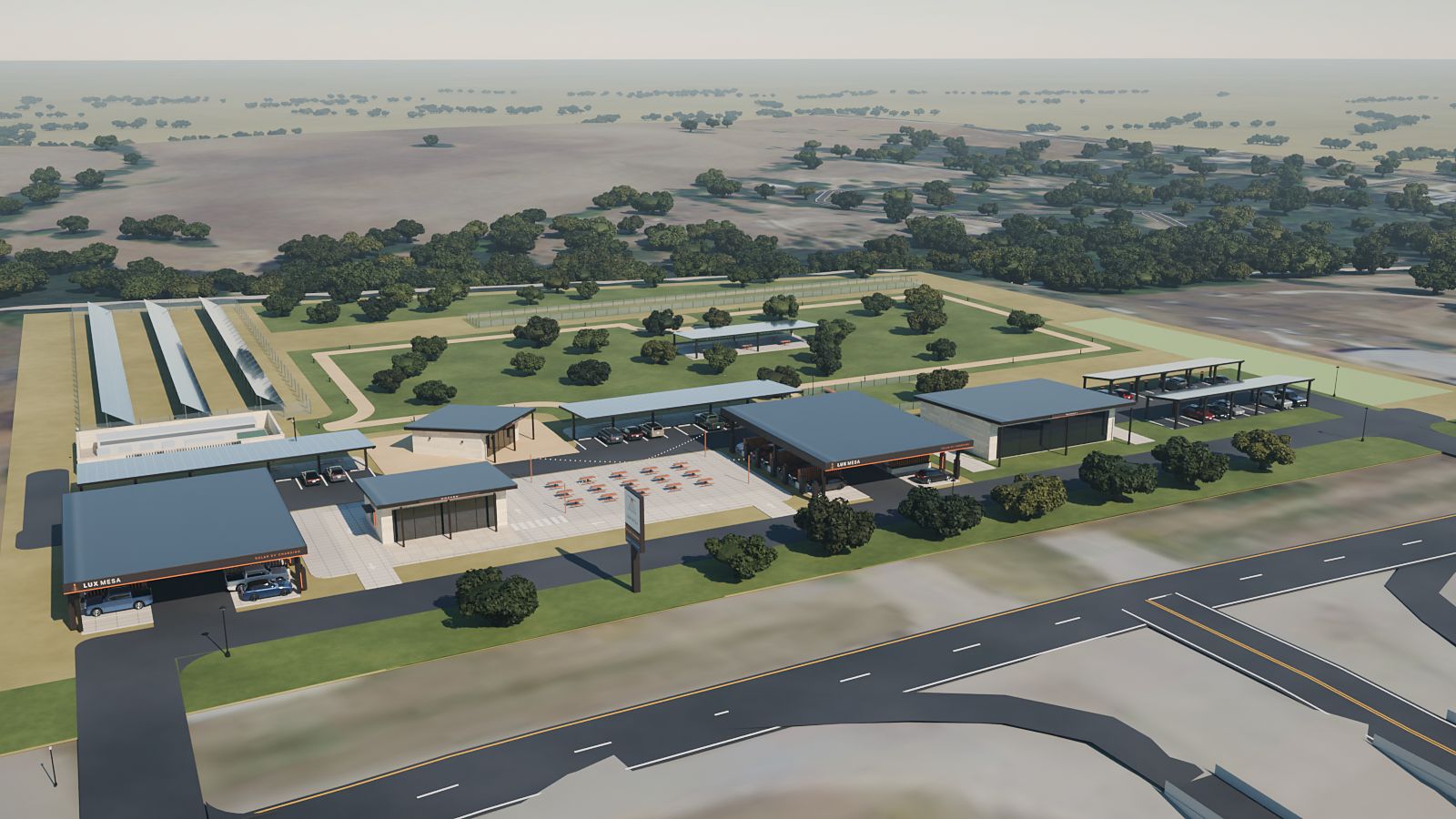
Every Lux Mesa stop uses the same plan: two shaded charging wings, a coffee shop with a drive-thru and patio, a private-stall restroom off a shaded courtyard, a garden with a lit walking loop and a fenced dog run, and solar over the parking, with warm, dark-sky lighting after sundown and security cameras over the chargers. Here is how it could sit on the southbound I-35 frontage road at Bruceville-Eddy.
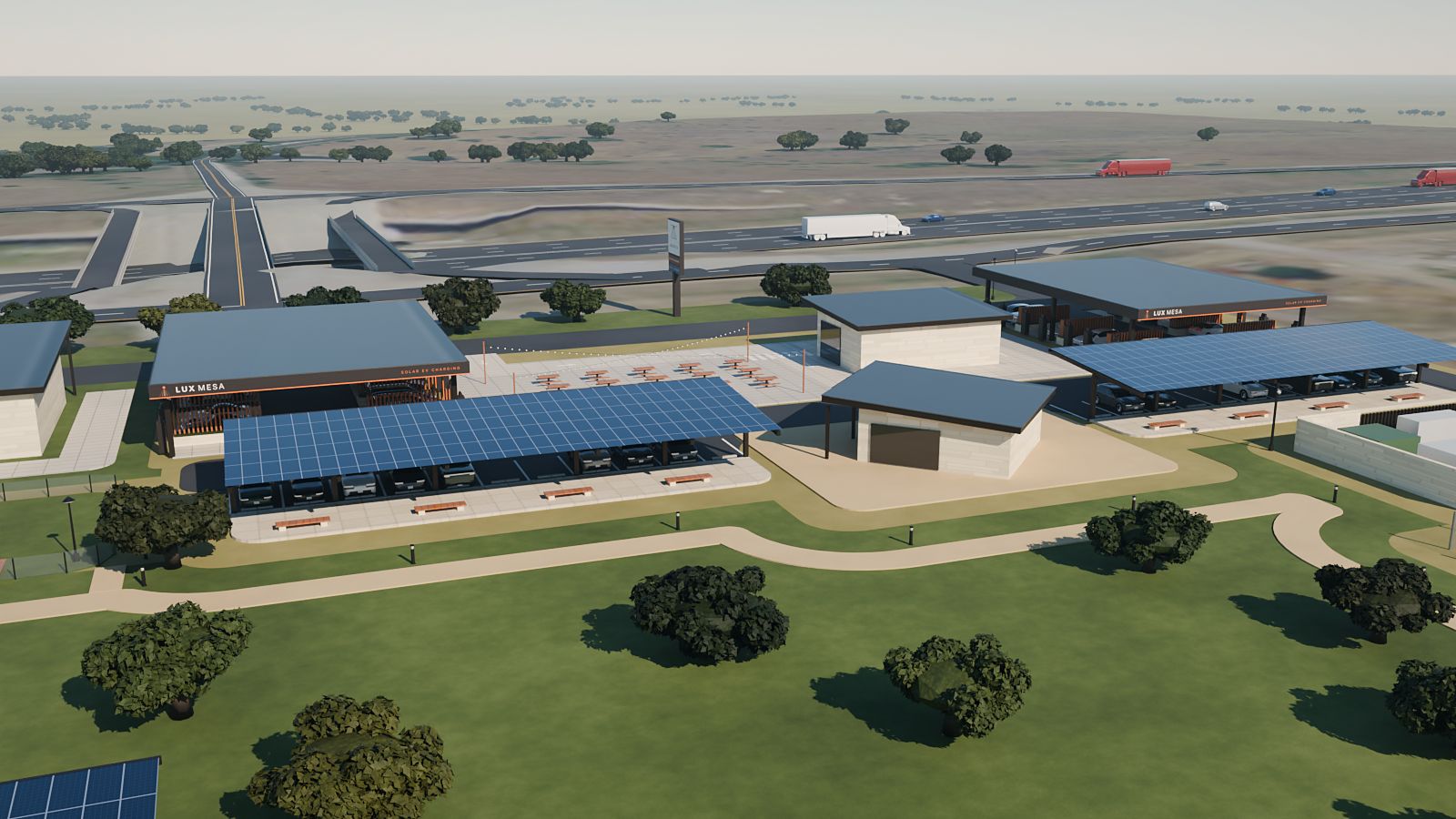
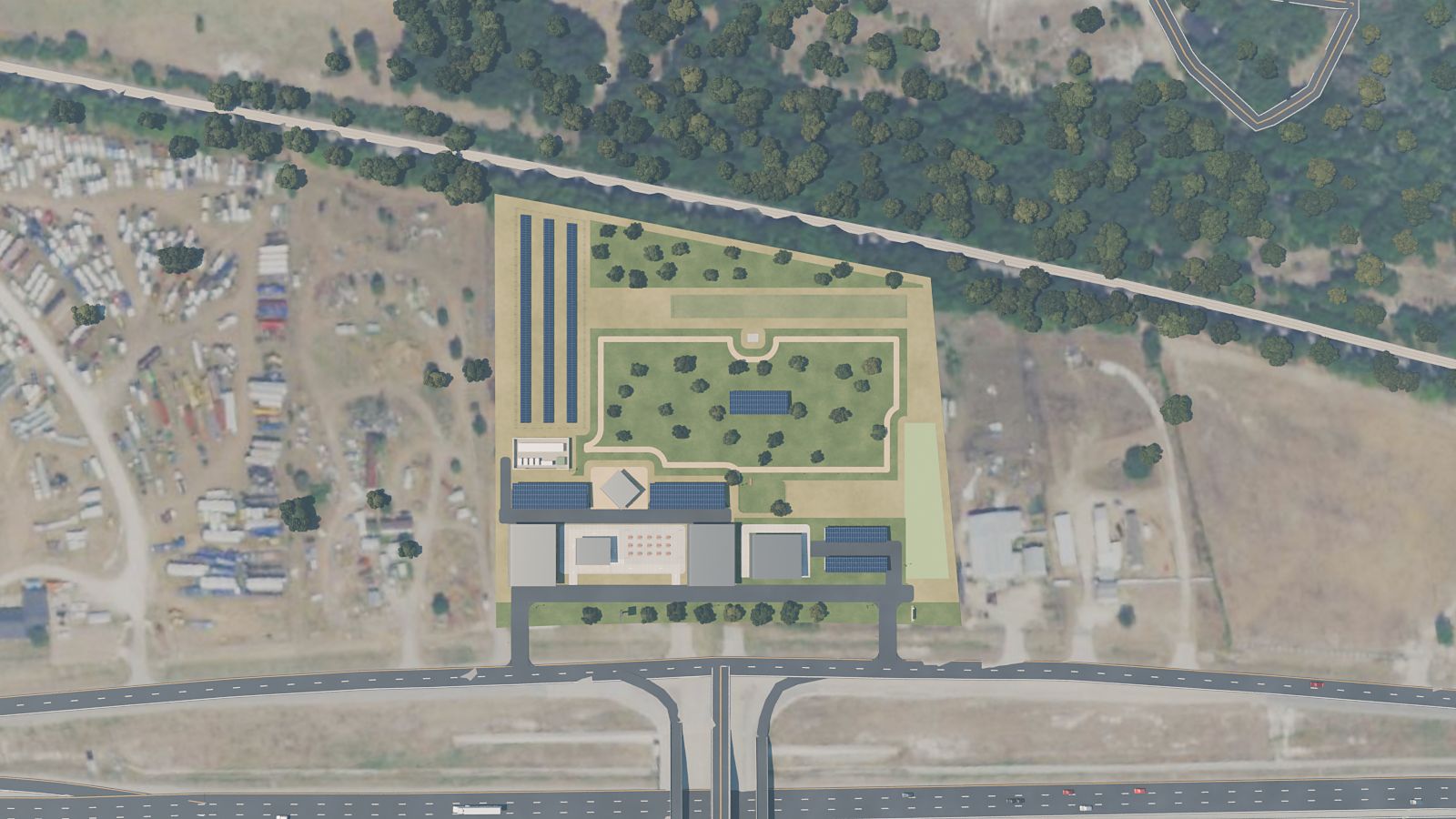
Concept renderings from the 3D model. Surroundings: map data © OpenStreetMap contributors; aerial photo and ground heights: USGS.
DC fast chargers under a solar canopy, built for any EV. Stalls are a generous 20 feet deep, so full-size pickups fit, and the station would grow from 8 to 28 stalls as demand does.
Individual, fully enclosed stalls with a shared wash area, unlocked by a code that comes with your charging session, reached by a shaded walkway under the solar carports.
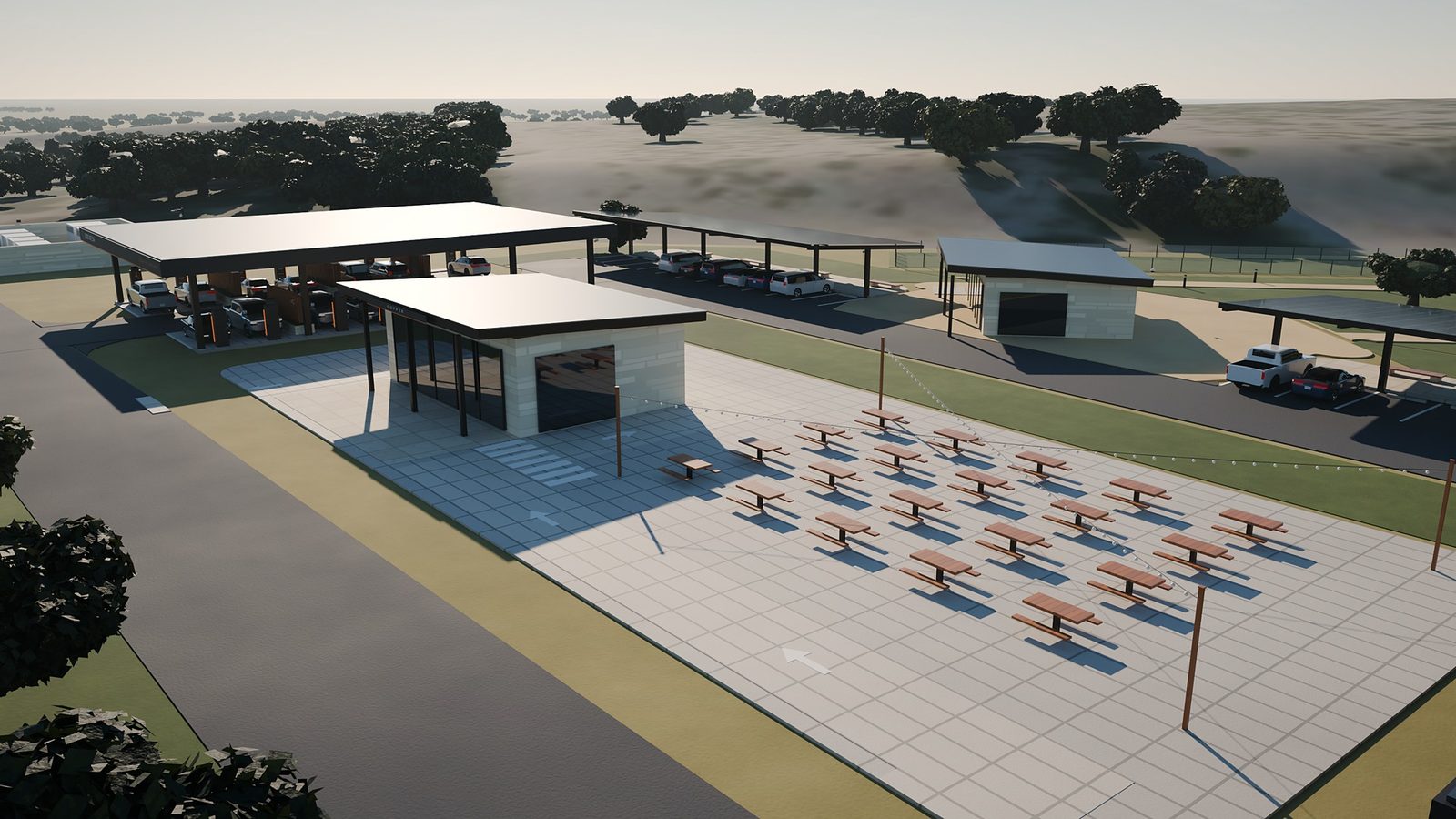
A coffee shop with a walk-up door, a drive-thru and an outdoor patio opening onto the garden. Grab a drink while the car charges.6
Renderings show the Lux Mesa design as planned for our first site, in Jarrell. All renderings and 3D views are conceptual.
Location
A potential site on the southbound I-35 frontage road at Bruceville-Eddy, between Waco and Temple, in McLennan County.
This is one of several locations along I-35 that Lux Mesa is looking at. It is not a committed site: the land, layout and numbers here are early planning estimates and may change or not go ahead.
Sign up for news on Lux Mesa stops across Texas, and tell us which sites you'd use.
KEEP ME POSTED